
Scandinavian Design: The Art of Cozy Minimalism
Scandinavian design emerged from the Nordic countries—Denmark, Norway, Sweden, and Finland—in the mid-20th century. Born from a need to brighten long, dark winters and make small spaces functional, this style prioritizes simplicity, practicality, and warmth. Unlike cold minimalism, Scandinavian design embraces hygge (a Danish concept of cozy contentment).
Key Characteristics
The Scandinavian look is often described as “light, airy, and uncluttered.” It avoids excessive ornamentation while celebrating clean lines and natural materials. The goal is a space that feels calm, functional, and genuinely livable—never sterile or showroom-perfect.
The Colour Palette
Light and brightness are essential:
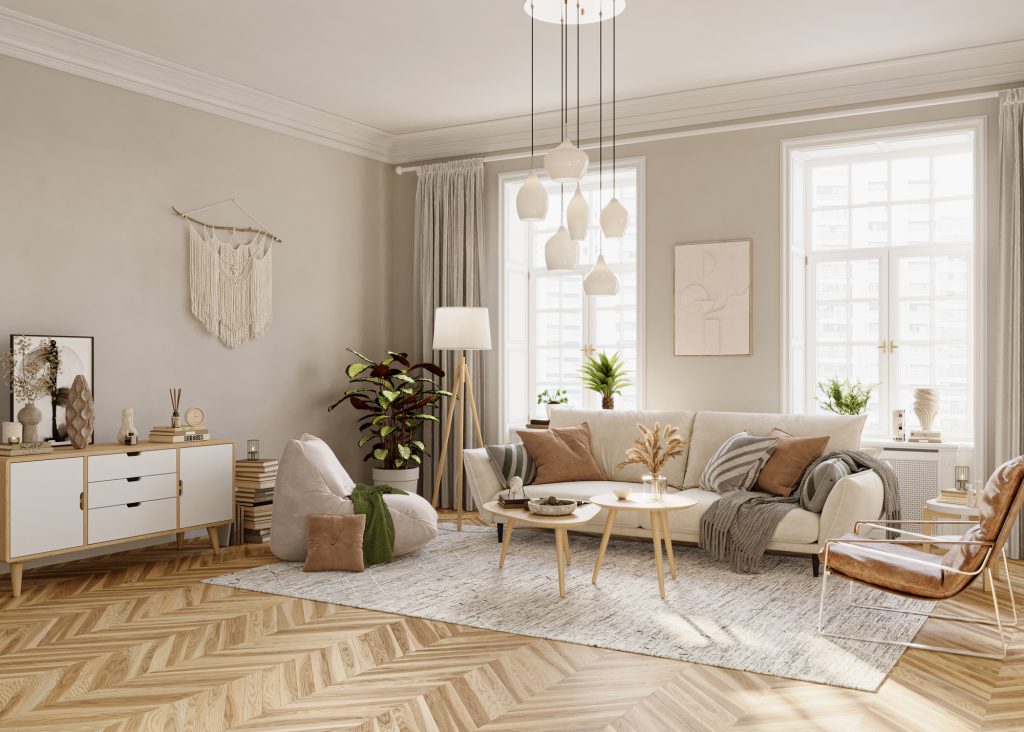
· Base Colours: Pure white, off-white, light grey, and pale beige dominate walls and large surfaces. These reflect natural light effectively.
· Accent Colours: Muted pastels (dusty pink, pale blue, soft sage) or deep, moody tones (charcoal, navy, forest green) add depth.
· The Look: Never use bright, neon, or highly saturated colours. Everything remains soft and natural.
Materials & Textures
Natural materials are the heart of Scandinavian design:
· Wood: Light-toned woods like beech, ash, and especially pine and oak are essential. Wood appears on floors, furniture, ceilings, and even toys. It’s often untreated or whitewashed, never dark or heavily stained.
· Textiles: Sheepskin throws, wool blankets, linen curtains, and chunky knit pillows add softness and warmth. Layers of texture prevent the space from feeling cold or hard.
· Other Materials: Leather (often pale or cognac-coloured), stone, glass, and simple ceramics.
Furniture & Layout
Form follows function completely:
· Clean Lines: Furniture is streamlined, unadorned, and functional. Legs are often exposed and tapered (mid-century modern influence).
· Light Colours: Upholstery is typically white, grey, or beige linen or cotton.
· Practical Pieces: Storage is clever and hidden. Built-in cabinets, modular shelving (like the iconic String system), and simple sideboards keep clutter out of sight.
· The Layout: Open, airy floor plans with plenty of negative space. Furniture is pulled away from walls slightly to create flow.
Flooring
Light wood flooring is non-negotiable in authentic Scandinavian design:
· Wide oak or pine planks in white, grey, or natural tones.
· Floors are often left bare, with only a few layered rugs (flat-weave or sheepskin) for warmth and texture.
· Never use dark wood, patterned carpets, or highly polished finishes.
Lighting (Crucial for Long Winters)
Because natural light is scarce for months, artificial lighting is treated as an essential design element:
· No Overhead Lighting: Use floor lamps, table lamps, wall sconces, and pendant lights instead. Light should be layered at different heights.
· Warm Bulbs: Always choose warm white bulbs (2700-3000K). Never use cool or blue light.
· Iconic Designs: Look for classic pieces like the PH Artichoke, AJ Lamp, or simple paper pendant lights.
· Candles: An absolute necessity. Candles are burned everywhere, on every surface, year-round.
Plants & Life
Bringing nature indoors is a key principle:
· Large leafy plants (fiddle leaf fig, monstera) in simple ceramic or woven baskets.
· Dried branches, eucalyptus, or fresh flowers in glass vases.
· Plants soften the clean lines and add organic shape.
How to Achieve the Scandinavian Look
1. Paint walls white or light grey. Maximise every bit of natural light.
2. Install light wood flooring or cover dark floors with a large light rug.
3. Choose simple, functional furniture with tapered legs and no ornamentation.
4. Layer textures: Add a sheepskin throw, a chunky knit blanket, and linen pillows.
5. Hide the clutter. Use closed storage or beautiful baskets.
6. Use multiple light sources at different heights, plus plenty of candles.
7. Add one or two large plants.
8. Keep walls mostly bare or hang one or two simple prints with thin black or natural wood frames.
The Final Feeling
Scandinavian design is more th
Log in to your account to like.